No.5
Symbiotic
Culture
Siargao, Philippines.
Here, livelihoods are closely tied to nature, shaping the island’s culture, hospitality, and the way it is built and lived. Life unfolds in close relationship with the land and its resources, forming strong community ties. In dialogue, generations pass down traditional knowledge of agriculture and craftsmanship, adapting to the climate and its necessities. Many of these practices remain in use today. Yet they are increasingly challenged by globalization and tourism, as linear systems of consumption shift dependency outward, away from local ecosystems and toward imported goods and external expectations.
Siargao welcomes its visitors in growing numbers. With them come opportunities, and quieter shifts in the island’s rhythms and resources. Responding to people’s demands for Western food and comforts may seem harmless to some, but it causes real consequences for local communities. Imported food, materials, and consumer goods increase local waste and interrupt regenerative cycles that island communities have relied on for generations. What feels like tourist convenience quietly undermines long-term sustainability.
“We’re not going to be able to shape tourism. We’re trying to establish what Siargao is. So if you come to Siargao, you come for Siargao. If you come to Siargao for Bali, you’re not going to find what you’re looking for.” — Mark Pintucan, Lokal Lab Co-Founder

Within this tension, Lokal Lab was founded, operating not as a reactive space but as a holistic response that reconnects culture, climate, and community, while inviting locals and visitors alike to rethink how they participate in the island life.
By forming a bridge back toward circularity, advocating education, experimentation, and discovery of Siargao’s rich heritage, Lokal Lab combines traditional expertise with innovation and grounding learning in nature-based perspectives.
“We wanted to be able to provide a tool to protect as much as possible of what is happening here. Not as a savior but as a platform to be able to show something different could work.” — Mark Pintucan, Lokal Lab Co-Founder
At the heart of Lokal Lab’s work is practice. By addressing the structural roots of extractive land-use systems, Lokal Lab creates space for systemic change across farming, land use, and local livelihoods, shaped and governed collectively by the communities most affected.
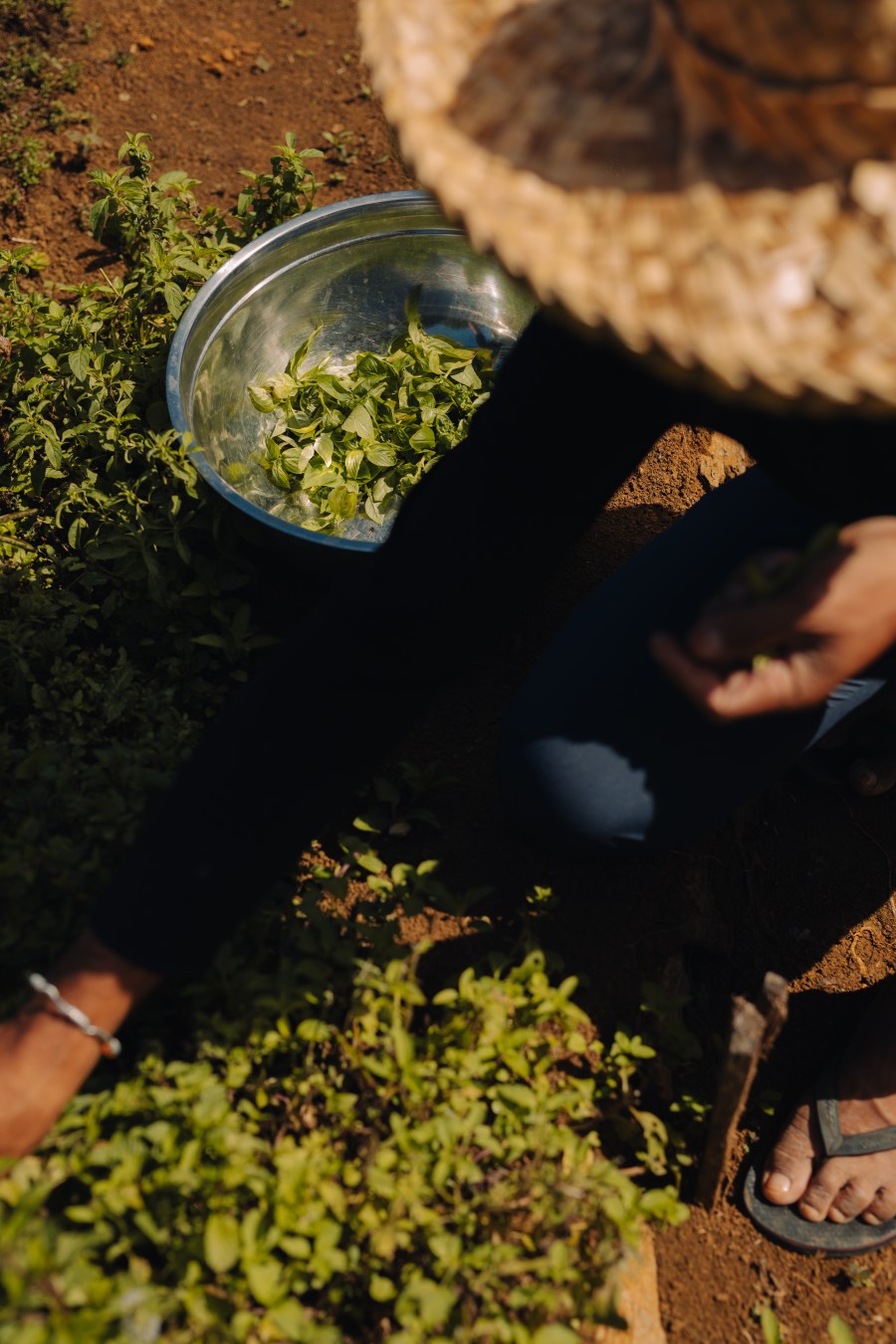
Through the Tropical Academy, a sustainable food system unfolds, teaching how to harvest, prepare, and compost local ingredients with a profound understanding of efforts and effects.
“Everybody should know about climate change, about pollution, gentrification, and exploitation. So if we know all these problems, we can finally focus more on the solutions. This is where Local Lab comes in.” — Mark Pintucan, Lokal Lab Co-Founder

Such self-sustainability strengthens shared responsibilities and social balance through collective participation. Moving away from the biased assumption that a farm needs to look ‘clean’, without any natural mess, Lokal Lab exemplifies sustainable alternatives to farmers to prove that it eventually works without monocrops.
As land pressures still rise, many farmers lose access to their fields and risk becoming employees rather than independent producers. Gradually, some begin adapting regenerative systems to their own land, weaving themselves into a network that cultivates pride and a renewed sense of belonging. Slowly, farming becomes a way to reclaim agency. It is no longer perceived as a burden, but as a viable and dignified path.
While families have long encouraged younger generations to seek opportunities elsewhere, interest in farming among young people has steadily declined. Initiatives like the Tropical Academy invite a new generation to reimagine agriculture as a space for independence and experimentation, giving the rebellious spirit a new direction.

For some, this means individual milestones: being able to afford a plane ticket, purchasing a tuk-tuk, and supporting their families. On a communal level, it strengthens the collective voice of farmers and earns recognition from local government as a sustainable system that works.
“Siargao is Siargao. And the reason it is Siargao is because of the people living here.” — Mark Pintucan, Lokal Lab Co-Founder
It requires awareness, adapting to the pace of nature.
Local experiences shape Siargao’s present, where recurring typhoons continually remind communities of their interdependence.
Nature is not peripheral here. It matters most.
But some challenges persist and require sustained attention:
Waste segregation and the understanding of composting are still uneven. Thus, Lokal Lab studies the underlying reasons in order to design communication campaigns that teach and demonstrate the benefits for communities.
“Is it a lack of knowledge, is it a lack of desire, do they not know what happens with the waste, or is it that they think that it all ends up in the same place?” — Mark Pintucan, Lokal Lab Co-Founder

From both sides, locals and visitors, are invited to rethink how they engage with the island.
A menu built around island-grown ingredients sparks appreciation for traditional flavors and the knowledge embedded within them, preserving cultural heritage while reinforcing ecological awareness.
Weaving workshops reconnect participants to materials harvested by hand. Community markets create direct exchanges between farmers and consumers.

Through these encounters, sustainability moves beyond theory and becomes something to experience.
Rooted in shared values of regeneration, equity, and local agency, Lokal Lab extends this dialogue beyond Siargao.
Through international collaborations and knowledge exchanges, it brings the lived realities of Siargao into global conversations on food systems and climate adaptation.
In doing so, Lokal Lab drives significant change locally while reframing how development across the Philippines can be imagined. Not through intervention but through empowerment.
“The ideal future is that Lokal Lab disappears because there’s no longer a need for it.”— Mark Pintucan, Lokal Lab Co-Founder
A future where care has become culture.
Elusive
Authenticity

Moving through places, diving into new cultures and structures, and perhaps falling for this way of living that is far from your own reality. By choice, you leave your comfort zone to explore what is so different from your habitat. You want to experience the authenticity of the simple life.
For many, this is what vacation looks like.
Yet sometimes it remains elusive. It’s not a matter of the time you spend abroad. It can be just a moment, an interaction. It’s about the sensation and connection you feel in these moments. Some people talk about the feeling of finally being able to breathe again. Recovering from their daily lives, their home reality, which they often describe as worse. Stressful and rushed.
Maybe we are escaping.
Abroad, you feel growth and inspiration emerging from new circumstances, and you are so touched by the hospitality of people you barely know, but who are so warm to you. You want to share all of this with your reality, your friends, and family. This journey, the many impressions and stories. But they won’t fully understand. Maybe they do, because you begin to capture the beauty of nature and people. You capture how happy you are and how easy everything feels.
Purity.
It’s about the aesthetic of the chaos, the aesthetic of the surroundings, the food. The colors and the contrasts. But you can never truly deliver this feeling. Not the real one.
We see so much from travellers that moves us to pack our things and follow their routes. People share their recommendations, accommodations, the secret places they have discovered, the special friends they’ve met, and how they actually gathered the courage to take this trip to challenge themselves. And that’s about it. People should be encouraged to do the same. To do something unusual.
To leave their comfort zone and be surprised by themselves. To learn and adapt.
Those memories will remain forever.
But all of this is a privilege, often overshadowed by easy representations that suggest everyone could just do it — which is not true. It is a privilege of freedom to travel. To balance between your reality and your journey. There is financial freedom in affording the journey. Emotional freedom in being able to leave something behind. You may not be able to give up your home unless you know this new place could become one. There are many more sacrifices when leaving.
And, most quietly, the privilege of access to other countries.
The world is marked by constant change, and travelling appears easier, more affordable, and more exciting.
While all these discussions on globalization and digital networks highlight the connectivity of countries across borders, one conflict after another reinforces separation. Politically and socially.
Travelling becomes somewhat luxurious.
The lifestyle you allow yourself while traveling. The authentic experience and the fancy pleasure. You may sometimes live more expansively than you would back home, simply because there you might not eat out three times a day. But here, the food is different. So good that you don’t want to miss out. It is part of the culture.
Still, there is also a desire for non-local food. The breakfast bowl. The oat milk cappuccino. But then, you find yourself around all the other tourists and nomads.
Is this still local?
We often want to protect authentic places, keeping them untouched and undiscovered, perhaps special. We care, so we gatekeep.
It is the desire from a genuine place. From wanting it to remain what it is.
This desire can be egoistic.
We romanticize the secret and unknown. But the popularity of places leads to developments that are essential for many communities. Tourism creates work. Visibility brings income. Ultimately, preservation quietly denies others the opportunity to grow, to benefit, to choose change on their own terms.
The discomfort may lie in realizing that authenticity is not something we can own. It is lived, negotiated, and constantly reshaped. Wanting a place to stay the same often means wanting it to stay convenient for ourselves. Responsibility, then, does not necessarily rest in withholding attention, but in paying it differently.
Moving with awareness.
Progress is unavoidable. Places will change. To be part of thoughtful development is to move with awareness. And if you are sensitive enough to ask what your presence means, you are already capable of shaping that change carefully.
No.3
Lines of
Inheritance

Tattoos have long outlined identities, holding the stories of diverse cultures and linking people to their ancestors, their beliefs, and the quiet sense of belonging.
From the self to the public, they carry individual meaning and communal understandings of religious rituals, spiritual protection, or artistic signatures. Yet, in some societies, tattoos remain associated with deviance and unconventional attitudes. Whether or not they are a statement of societal resistance, many aesthetic choices can be traced back to cultural heritage.
Ink artists imprint their views of the world, their own handwriting, and mark their personal pieces onto the skin. Each tattoo, like an intimate canvas, carries both inspiration and connection to people and their history.
For some, it is a hidden keepsake, a quiet secret beneath clothing, noticeable only when one looks closely. While others declare their tattoos as accessories, proudly sharing all the meanings and memories behind them. Trends shift, and aesthetic uniqueness deepens. What shapes an artist’s signature is the way they inhabit their own identity.
ca.dao is an emerging artist and cultural mediator who lifts traditional Vietnamese heritage into new poetic forms, allowing it to unfold across different dimensions of meaning and remembrance.
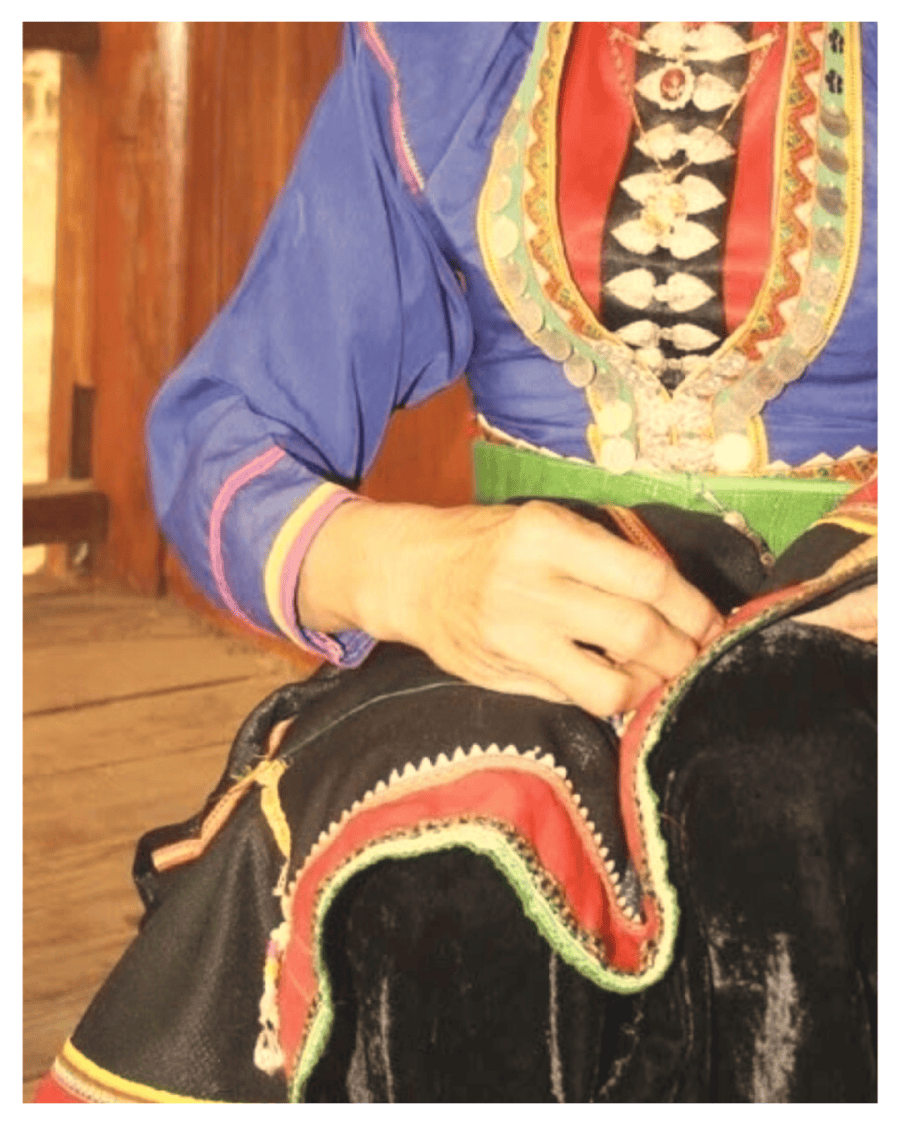
Her inspiration draws from the traditional woven art of Vietnamese ethnic groups, transforming geometric symbols and their layers of meaning into redefined expressions of collective hopes for peace, good fortune, and blessings.
“My identity rests in how I feel and observe the world. Every line I draw holds a certain sincerity, an emotional rhythm that connects me to the person on the other side of the needle.“— ca.dao
Travelling across the country and engaging with different communities profoundly shaped her artistic direction. From Vietnam’s fifty-four ethnic groups flows a rich cultural heritage, held in languages, artefacts, and long-rooted traditions. In their woven fabrics, symbols tell the stories of communities, shaped in thread, pattern, and patient handwork. Anchored in the lineage of these craft traditions, ca.dao carried her passion from drawing into tattoo art

With the guidance and devotion of her mentor and life companion, she stepped into Saigon’s creative community @th.ink.room, a space of communal exchange, experimentation, and artistic evolution, where her practice could truly take form.
Her rare process emerges through linocut: moving from carved block to living skin, turning motifs from heritage into hand-poked tattoos, and allowing such inheritances to be carried, lived with, and passed on.
“For me, the charm of linocut lies in its rhythm, the deliberate pace, the meticulous carving, the steady movement of hand and breath.“— ca.dao


While Vietnam’s ethnic communities hold rich cultural heritage, many of their traditions face societal invisibility and quietly fade from view.
“Giving them space in today’s visual landscape feels like a small way of keeping those stories breathing.“ — ca.dao reflects.
Traditions live and last through the hands of generations, in the quiet ways they rediscover traditions and retell them without letting their essence fade. Through tattoo art, especially this form of cultural storytelling, people learn from one another, shaping their own interpretations and allowing meanings to blend across backgrounds and personal histories. There are no boundaries for reinterpretation when it is renewed with care and awareness.
“Culture is my foundation, style is my expression.” — ca.dao
As she describes the force behind her work, culture is not a fixed monument, but a living body, something that breathes, shifts, and ultimately adapts. There is more universality in motifs than most people realise. Despite their specific origins, they speak to something deeply human: the desire to understand oneself and to remember in the midst of life.
When such visual languages reappear in contemporary form, they renew cultural belonging. They allow minority traditions to be seen, recognised, and carried into new contexts that spark curiosity, resonance, and continuity.
A living heritage, carried forward one line at a time.


No.2
Balearic
Eclecticism

There is this sonic phenomenon when music drives you, touching your senses, and unexpectedly shifting both your mental and physical state.
Whether consciously designed or unconsciously felt, spaces construct special experiences through the way they carry and unfold sound. Architectural design, rising lights, and the responding movements to the beats all contribute to immersive acoustic dimensions. The awareness of auditory experiences, therefore, reaches far beyond clubs and parties. Restaurants, bars, and hotels that aim to build enduring communities have to cultivate atmospheres that satisfy every sense. Ibiza, long famed as the destination for parties and the birthplace of the Balearic Beats, exemplifies how hospitality can be transformed by music curation, where natural and analog preferences quietly stand against the big, the loud, and the mainstream.
Since the early 1980s, this original cosmos, with its free-spirited heritage and DJ culture, has been defined by crossing boundaries and connecting cultures. The eclectic blend of Italo-disco, new wave, ambient, reggae, pop, and early house refused to be confined to boundaries and functioned as a profound rebellion against any limitation. In today’s music industry, Balearic Beats can only be maintained and redefined by those who value its origin. Its organic sounds find home among open-minded crowds, attuned to freedom and feeling over formula.

Jaime Fiorito knows these works by heart. As a renowned and celebrated DJ on the island, he carries the legacy of his father, DJ Alfredo, whose epic sets at Amnesia back in the 1980s gave birth to the Balearic sound. Alfredo became known for his free-form selections, shaping a genre that was less a fixed palette of sounds than a communal mindset.
As a music native, growing up in the light and shadow of clubs, surrounded by the eclectic twists of intercultural genres, Jaime absorbed a musical education both intimate and expansive. Today, his DJ sets weave leftfield house and techno with disco, African rhythms, and seductive Balearic house, tailor-made for dance floors as much as deep listening. Carrying this Balearic spirit forward, he blends it with international sounds, distilling it all into one essential thing—atmosphere.
Throughout his journey in the industry, he has witnessed firsthand the rapid changes and commercial pressures that strain Ibiza’s authentic music culture.
Navigating the paradox of preserving originality while depending on the business side is a challenge for many artists on the island. Yet there are ways to hold onto the spirits by offering meaningful alternatives. With projects like La Granja and, most recently, URUSAI Sunset Bar, Jaime extends a vision beyond the booth, curating spaces where sound and hospitality converge into a sensory journey.

By connecting selected artists to the venue’s texture and its diverse listeners, he counters the mainroom homogeneity and all productions that entertain the masses, creating sanctuaries where genres, acoustic awareness, and cultural identity come together.
“Music in hospitality is more than entertainment: it becomes a cultural reference point. If it’s done well, it’s like fashion—timeless, memorable, and something people want to identify with. “– Jaime Fiorito.
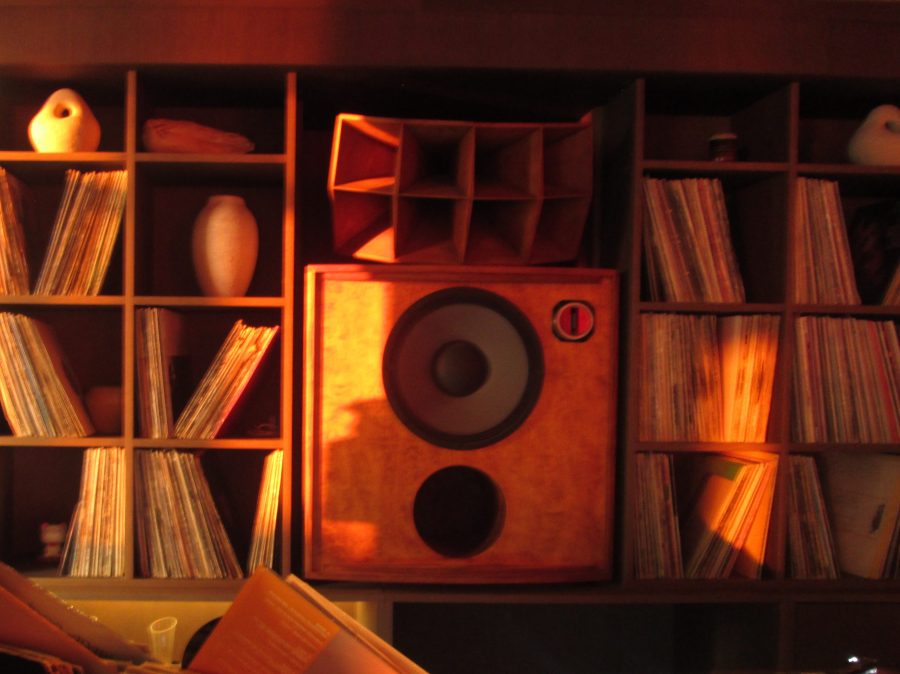
As the first and only audiophile bar on the island, URUSAI offers exactly this opposing experience, far removed from the generic setups around Ibiza. Drawing inspiration from Japanese jazz kissa culture, the renowned architect Kulapat Yantrasast, from the WHY Architecture studio, designed a space that allows pure acoustics to naturally blend into the lines and materials. Paired with refined Japanese cuisine, both music and dining become inseparable.

It contrasts the loud and sensational echoes. Yet it feeds the realities of commerce. Drinks and food are costly, creating a chic air of exclusivity, while barefoot dances and a progressive spirit keep it grounded. It sparks the question of whether a space carrying Ibiza’s cultural music legacy truly unites diverse groups, bringing locals, tourists, connoisseurs, and newcomers alike.

Jaime Fiorito puts it simply: “I think that sound is a lubricant for social classes; it connects people across generations and different backgrounds. But if you blend styles and eras, you create common ground and bring very different groups together. “
His vision is to move away from the sameness, evolving through the confrontation of opposites. In this process, music becomes the element that blends contrasts, the medium for new interactions. However, accessing those various groups still contains barriers. A local and international network of music and art lovers comes together, long-time Ibiza devotees, curious young crowds, and the staff, all diving into the atmosphere. It’s about following the rhythm, forgetting reality, and letting loose.
While the island feeds into commodification, spaces like URUSAI are building much of their reputation on Instagram. People are eager to share aesthetic photographs of the food and the DJs, sometimes forgetting the joy of the real moment.
“My goal is to make the music strong enough that they forget about their phones and stay present, “Jaime says.
Guiding people between nostalgia for the old and excitement for the new, Ibiza is about distraction from reality, about liberating minds. Yet the overruling of generic preferences and trending ‘hippies’ with mainstream minds makes music less impactful as a force for change. What truly sparks difference now emerges through art, small gastronomy, the spirits of workers, and the island’s eclectic character.
No.1
Reinventarse.
Reinventory.
— by Al-Trock, Ibiza

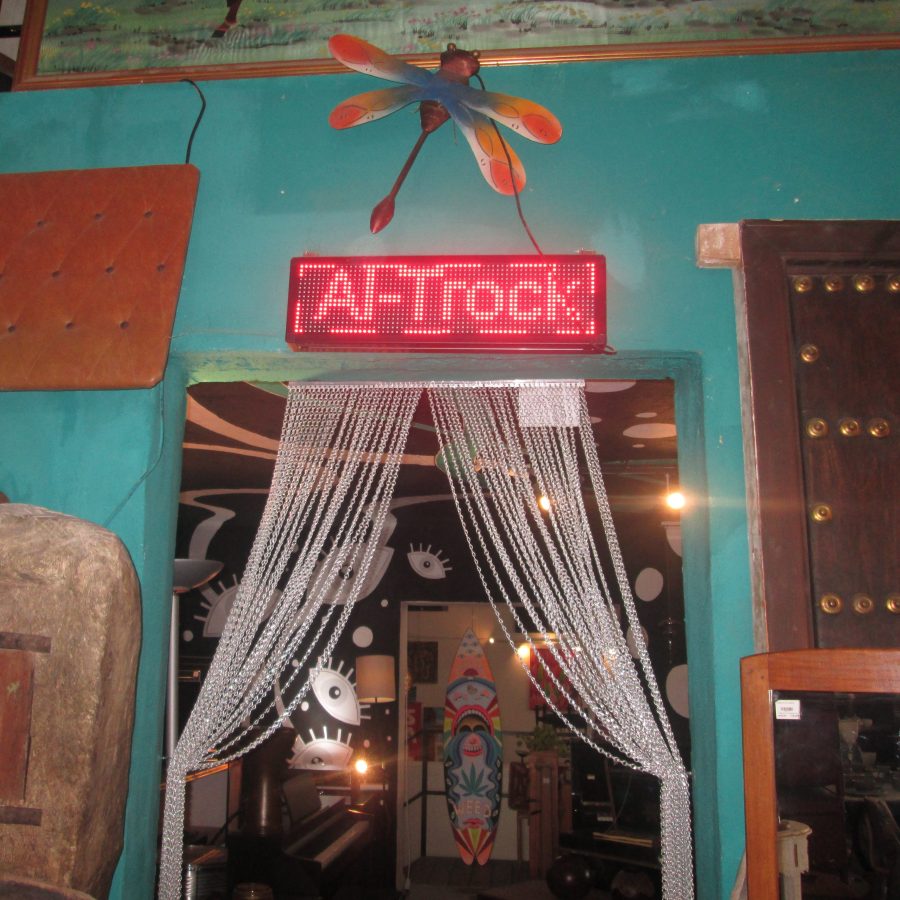
A place of family, community, and above all, a journey through treasures and untold stories.
A furniture store that feels like a living museum. Carefully curated with love for detail and rooted in compassion.
The halls of Al-Trock invite its visitors to an international time-travel experience right in the heart of Ibiza. Between one-of-a-kind furniture, sparkling lamps, and an abundant vinyl collection, big and small treasures await, revealing stories and cultures from across the globe.
On an island like Ibiza, internationally known as a magnet for art and indulgence, the range of creative antiques is as diverse as its people. Artists, designers, and dreamers from around the world find their inspiration here in Ibiza; in a place that honors imagination, fuels creativity, and sparks its luxury. Over the past few years, the booming commodification of the island has redefined the identity of many places that once stood for liberating, creative craftsmanship, now facing commercial signatures and inflated prices.
But the concept behind the López Sánchez family’s store doesn’t cater to the kind of luxury the Balearic party island is famous for today.
Al-Trock is authentic, intimate, and perhaps exactly the initiative the island and its community need — a quiet resistance to the constant flood of the new.

But I’m not luxury — Maybe a different kind of luxury,” says Yolanda López Sánchez about her shop.
While many customers on the island do have higher budgets, much of the inventory is of exceptional quality. That certainly makes preservation and resale easier, but not necessarily more profitable than one might assume.
Al-Trock is a business full of emotion. Not just because of the sentimental value of the furniture and the stories it holds, but because of the loving way each piece is restored. Since 2021, the store has been run by Yolanda López Sánchez. Her expertise grew out of both passion and experience. After being an employee for over eight years, she took over the store during one of its most difficult moments.
When the previous owner disappeared with all the money and inventory, it was her family who convinced her to keep going.
Together with her two sons, Oliver and Isak, she overcame the crisis with heart and dedication, often for just a modest return.
The idea of buying second- or third-hand furniture and clothing is an evolving global trend, gaining more appreciation in recent years. However, international secondhand trading doesn’t automatically stop the flood of outdated goods. It needs serious buyers like Al-Trock, who find new owners on the island, enabling true local sustainability.
“It’s important to recycle and reuse in order to protect our island. In the end, what I do here is my way of helping to preserve Ibiza.”
— Yolanda López Sánchez
Al-Trock’s circular approach is deliberately limited to buying and selling within Ibiza, to protect the island’s limited space from unnecessary waste. Customers can return furniture at any time, and the pieces are resold once more. Their stories continue, and with them, a growing community of people becomes part of this shared narrative. At Al-Trock, you are invited to search, linger, and especially, reinvent yourself.
Although so much of the island is increasingly shaped by profit, places like Al-Trock preserve a part of Ibiza that still holds on to its original soul — a cultural microcosm, a small but vibrant reflection of what Ibiza truly is, beyond the clubs.
Al-Trock is a business full of emotion. Not just because of the sentimental value of the furniture and the stories it holds, but because of the loving way each piece is restored. Since 2021, the store has been run by Yolanda López Sánchez. Her expertise grew out of both passion and experience. After being an employee for over eight years, she took over the store during one of its most difficult moments.

When the previous owner disappeared with all the money and inventory, it was her family who convinced her to keep going. Together with her two sons, Oliver and Isak, she overcame the crisis with heart and dedication, often for just a modest return.

The idea of buying second- or third-hand furniture and clothing is an evolving global trend, gaining more appreciation in recent years. However, international secondhand trading doesn’t automatically stop the flood of outdated goods. It needs serious buyers like Al-Trock, who find new owners on the island, enabling true local sustainability.
“It’s important to recycle and reuse in order to protect our island. In the end, what I do here is my way of helping to preserve Ibiza.”
— Yolanda López Sánchez
Al-Trock’s circular approach is deliberately limited to buying and selling within Ibiza, to protect the island’s limited space from unnecessary waste. Customers can return furniture at any time, and the pieces are resold once more. Their stories continue, and with them, a growing community of people becomes part of this shared narrative. At Al-Trock, you are invited to search, linger, and reinvent yourself.
Although so much of the island is increasingly shaped by profit, places like Al-Trock preserve a part of Ibiza that still holds on to its original soul — a cultural microcosm, a small but vibrant reflection of what Ibiza truly is, beyond the clubs.