Still Salvage
Close enough to be seen, too far from being touched.
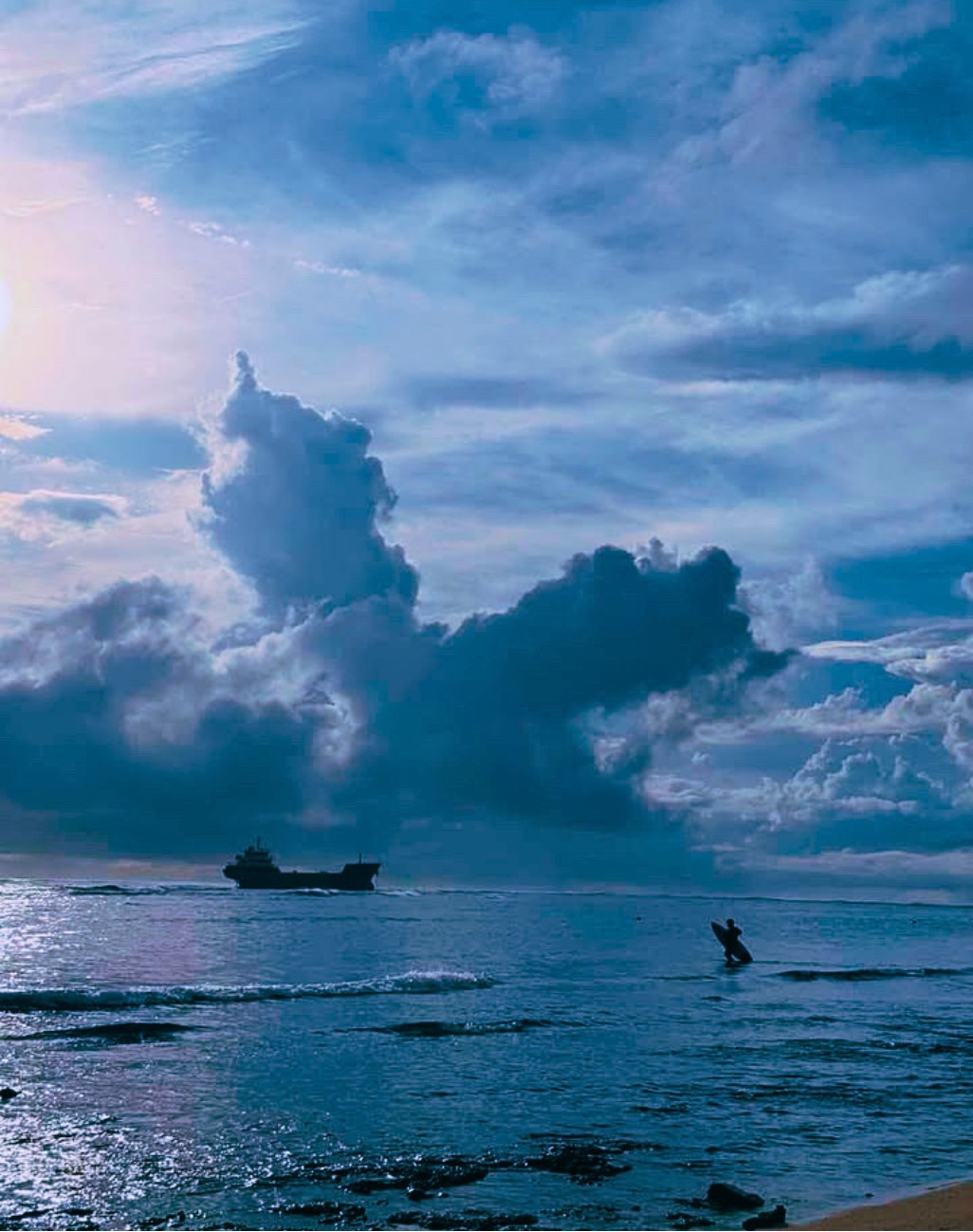
A stranded motor tanker off the coast of Burgos, Siargao Island in the Philippines. It’s a mystery; people wonder and speculate. A shared concern, yet too little to actively resolve. From the very first day, many already sensed this ship would not leave anytime soon.
The Philippine-flagged motor tanker, identified as MT Cheng Xian Feng 168, struck the coral reef of Burgos on January 11, 2026. The originally Chinese-owned vessel suffered an engine failure while en route from Cagayan de Oro to Homonhon. The Filipino crew arrived safely on land but remained awaiting further updates for months. Since then, its 712 gross tons have drifted under the strong currents and heavy waves, pressing along the shoreline day by day.
What was transported on the vessel is unknown. So is the scope of actions to handle the consequences caused. While local authorities report no confirmed oil spill or fuel leakage, the vessel’s prolonged presence and its location near a Marine Protected Area raise serious concerns about environmental risks and safe removal.
Passing the road to Burgos each day, and watching the tanker drift closer and closer to shore, made me wonder why nothing was being done. So I investigated. I spoke with the community, institutions, local fishermen, international marine biologists, and engineers to explore the deeper context of the incident.
While technical assessments and salvage operations were once announced, no visible progress has followed. What moves instead is responsibility — slowly, almost imperceptibly. Decisions wait for resources; resources wait for decisions, and in between, the reef is extensively affected. Today, the estimated damage spans up to 1,000 square meters. In response, the vessel’s owning company is supposed to pay a penalty of 16,000 Philippine pesos (250 Euros) per square meter affected.
Compensation exists on paper,
but not necessarily in reality.
Among local voices, there is little confidence that any financial compensation will reach those most impacted, nor that clear rehabilitation measures for the reef will actually be carried out. Part of the allocated funds is assumed to be shared with the local association of fishermen; however, many do not expect to receive direct support.
Fishermen speak of damaged reef structures, of changes in the water, of having to move their fishing routes 10 to 20 miles further out to sea. The cost of fuel rises with every additional mile, turning each day’s work into a negotiation between income and expense.

At the same time, any further actions continue to depend on financial and logistical resources that have not yet materialized. Such operational limitations raise questions about whether current efforts are sufficient to examine and address the ecological degradation unfolding beneath the surface. From an environmental perspective, the absence of a visible oil slick does not equate to safety.
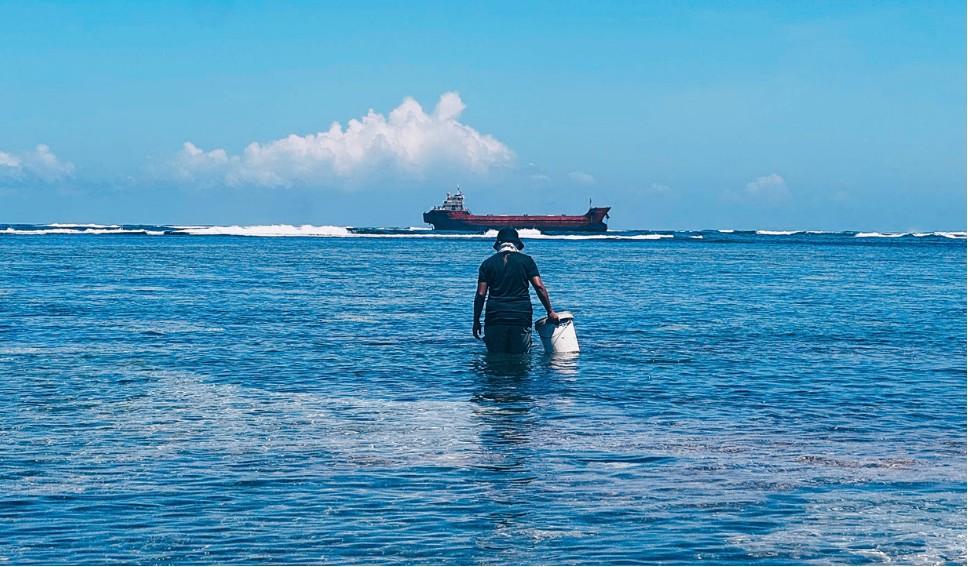
“Any stranded tanker near the coast should be treated as a serious environmental risk, even if no spill has been confirmed.”
An independent biologist
If diesel is released, it does not always announce itself dramatically. It disperses quickly, especially in shallow, dynamic waters. But it is acutely toxic, capable of affecting coral reefs, seagrass beds, mangroves, shellfish, and juvenile fish, often without immediate visible traces.
In a place like Siargao, this extends beyond ecology. It touches fisheries, tourism, and the fragile balance between community and environment.
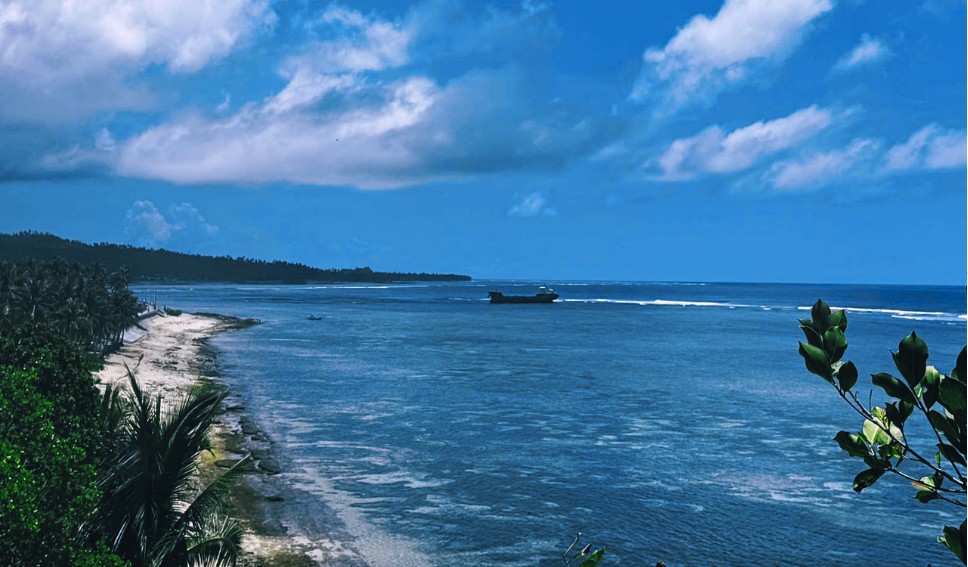
The paradox of removal
According to the Municipal Disaster Risk Reduction and Management Office (MDRRMO), the initial plan was to remove the vessel once the sea conditions had calmed, either by lifting it onto a floating platform or by towing it with a tugboat.
However, since the vessel has moved so close to the beach, the water is now too shallow for another boat to safely approach. Removing the ship is not a simple act of resolution. It is, in itself, another risk. Dragging the vessel across the reef could cause further destruction. Lifting it with cranes or heavy equipment may damage the shoreline. But leaving it in place will allow corrosion to set in, with the metal gradually breaking apart, scattering debris across the reef and eventually onto the beach.
Globally, salvage operations in similar circumstances often involve highly specialized strategies by external companies to move massive structures under complex conditions, lifting entire vessels or dismantling them piece by piece on-site. Undertakings of this scale require extensive time, coordination, and significant financial investment.
According to a salvage specialist, the key is not simply “quick removal,” but “early controlled intervention”.
The priority is to stabilize the situation, prevent pollution, and survey the hull and reef at different stages to minimize additional damage during both assessment and removal. Simultaneously, underwater surveys could document coral contact zones and seabed disruption, evaluate the vessel’s structural integrity, identify grounding pressure points, tidal movement, and the feasibility of different recovery methods.
Uncertainty persists.
What is needed is not reassurance but transparency: independent monitoring, clear updates, and a defined plan, handled with urgency and seriousness, involving the government, national agencies, and the affected community.
During conversations, no one disputed the urgency of resolving the situation. What differed was how its consequences were understood. Reports of attempted unauthorized boarding and fuel theft reflect a growing local fascination. When damage is assessed in isolation and downplayed in public discourse, how can meaningful protection take place?
What remains is the mystery: the ship is still there, and questions last unanswered.
Disclaimer: This investigation is based on my observations, interviews, and perspectives gathered on-site and through independent expert input. Sources remain anonymous for safety reasons. I do not intend to accuse or discredit any governmental institution, but to document the environmental and institutional complexities surrounding the incident. It is acknowledged that additional internal processes, response measures, or ongoing efforts may exist beyond what has been publicly communicated.

